

Career Development Application
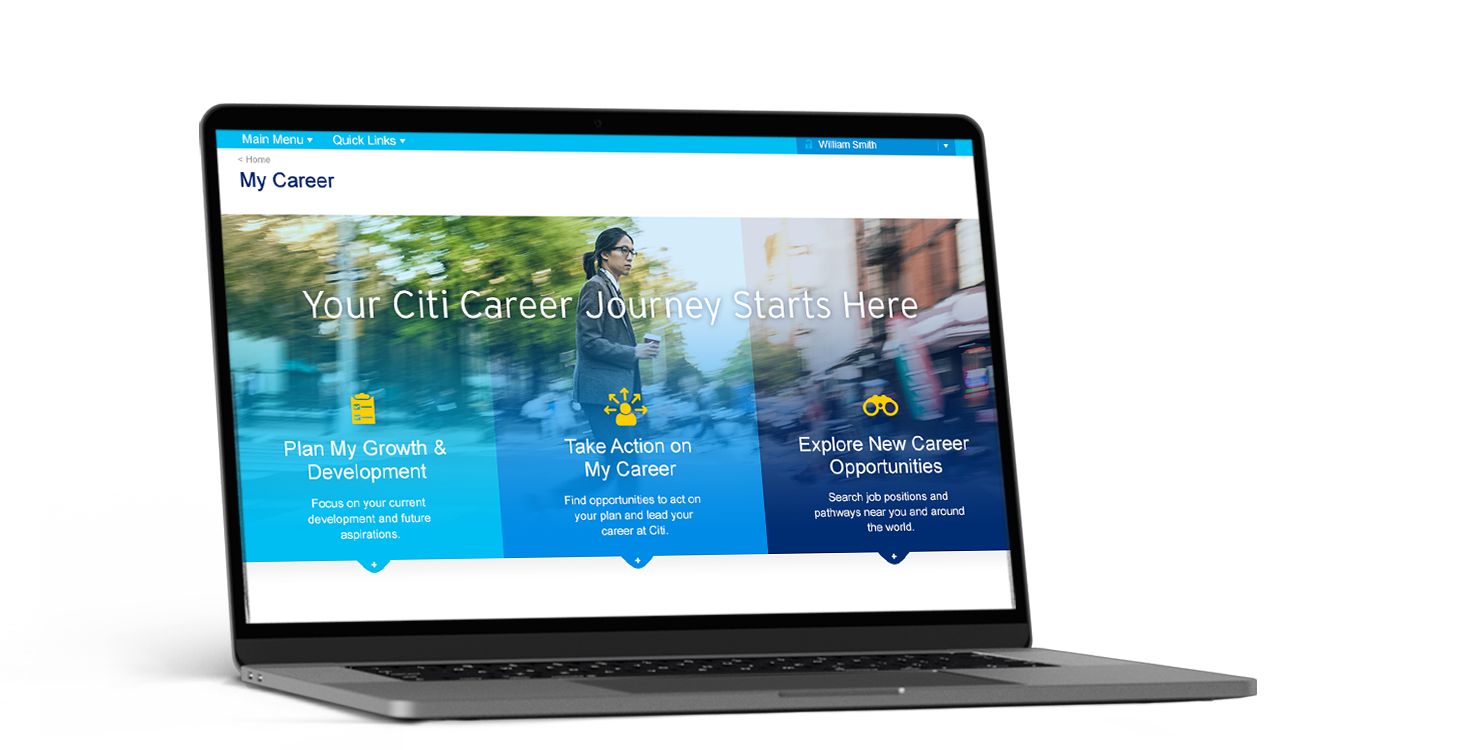
Designed the Citi employee learning and career development portal experience.
CLIENT
Citi Bank
ROLE
Design Director
TEAM
- Design Director
- 3x UX Designers
- 1 Product Manager
- 2x UX Content Managers
- Technical Lead
- 2x Engineers
DURATION
25 Weeks
BUDGET
4.5M
PROJECT OVERVIEW
As part of a global HR portal modernization effort, the client needed to overhaul their Employee Self-Service Learning and Career Development platform. Historically distributed as a static website sourced from disparate print/PDF documents approved by exhaustive legal reviews, the handbook served as the primary source of HR policies and training materials for all employees. However, its annual updates were plagued by slow processes, outdated content, inconsistent editorial standards, and inefficient revision cycles.
The client wanted a simplified, mobile-ready, user-first experience that would not only align with the new HR portal but also stand alone as a dynamic and searchable tool. The goal was to make the handbook easier to use and update, more accessible across mobile devices, and more consistent with the brand and employee experience strategy.
CHALLENGE
The challenge was twofold: ensuring consistency and brand alignment across a multi-designer intranet rebuild while simultaneously creating a unique learning and development microsite that integrated with, but did not visually or functionally conflict with, the larger portal.
The client also wanted the Career Notebook to move beyond a static repository of links. It needed to be a dynamic and intuitive experience, enabling employee-driven resource curation, collaboration, and progress tracking. Achieving this required balancing user autonomy with governance and maintaining system scalability. All while maintaining alignment with legal oversight.
APPROACH
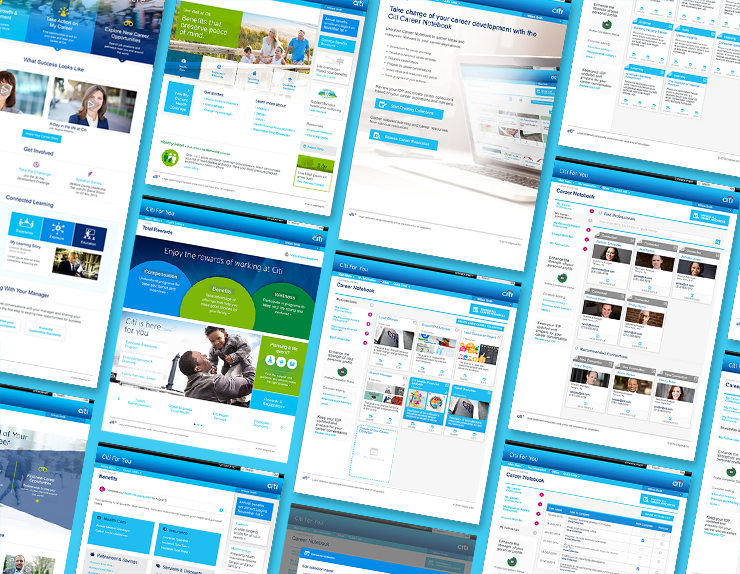
To meet business and user needs, the Career Notebook was designed as a gateway to curated, role-specific, and evolving learning content. Features included:
- Pre-packaged resource collections for key career paths and events (e.g., onboarding, annual reviews).
- Role-based and region-specific content, including input from employee resource groups.
- Integrated third-party content, delivering fresh, relevant resources.
- Personalization features, allowing users to save, organize, and share collections.
- Social learning interactions, including sharing resources, following peers or mentors, and setting learning goals.
We created an experience that mirrored a digital whiteboard (e.g., a Pinterest-style tile board) while remaining anchored in enterprise usability and governance standards.
OUTCOME
The result was a scalable and brand-aligned portal with a flexible microsite that introduced new levels of employee autonomy and personalization. Thanks to consistent asset management and rigorous adherence to brand standards, the overall intranet felt cohesive despite being built by multiple teams. The Career Notebook, in particular, introduced a previously unavailable layer of interactive, user-owned learning content.
Deliverables:
- UX strategy documentation
- High-fidelity interface designs
- Interactive prototypes
- Modular component libraries
- Redlines and annotated design specifications
- Design standards documentation for broader team use
IMPACT
The Career Notebook significantly increased employee engagement and empowered individuals to take ownership of their professional development. It also supported strategic HR goals by aligning employee behavior with long-term learning and career planning initiatives.
- Scalable solution implemented in support of over 200k employees
- Contributed to individual ownership of personal career strategy growth
- Reinforced a “What I aspire to do/be” mindset
- Reduced barriers to findability of learning and career resources
- Enabled tracking, sharing, and following of learning progress and collections
Business Value:
- Increased distribution speed of HR learning resources and communications by 96%
- Improved governance and content consistency across the learning repository by 60%
- Heightened engagement with career development and internal mobility
- Fostered proactive employee-manager career conversations
Employee Value:
- Improved access to helpful employee resources by 86%
- Increased utilization of employee self-service tools and resources by 54%
- Streamlined career planning through centralized tools
- Supported informal learning aligned with 70/20/10 development models
- Enabled preparation and sharing of resources for career conversations