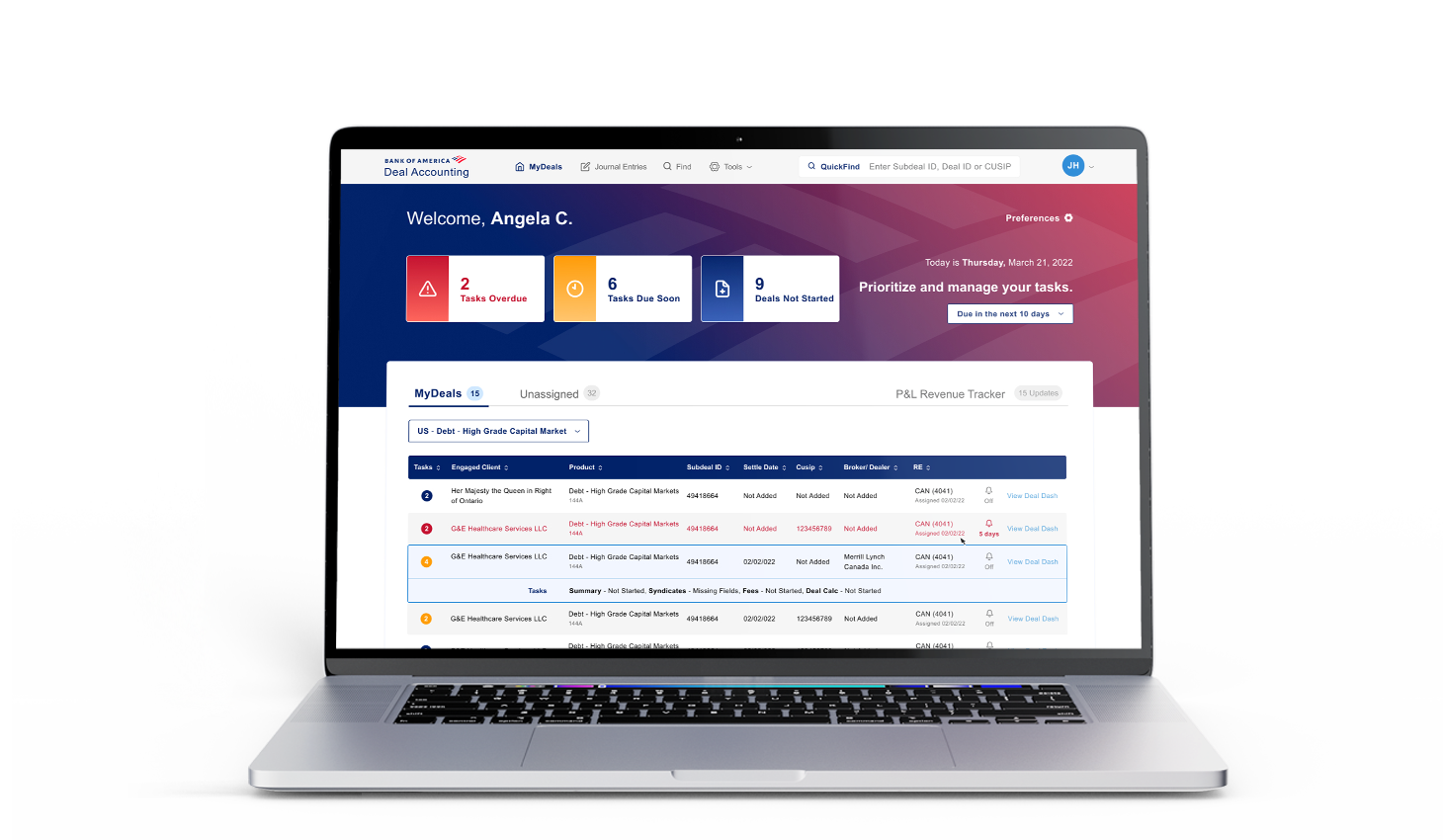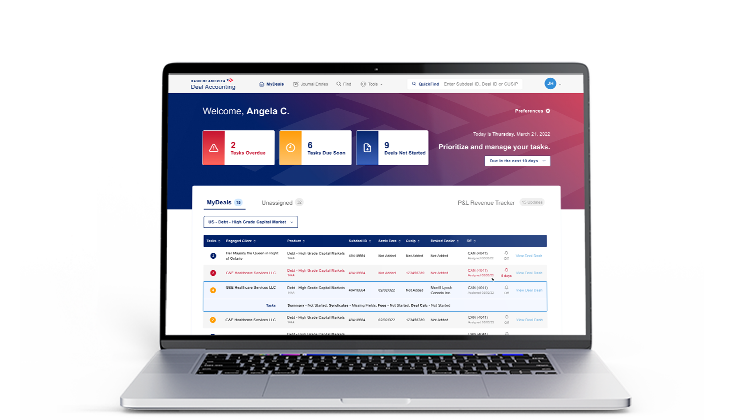


Deal Accounting Platform
Modernized the Bank of America account management application used by the global investment banking group.
CLIENT
Bank of America
ROLE
Design & Delivery Lead
TEAM
- Account Lead
- Design Director
- 3x UX Designers
- 1 Product Manager
- Technical Lead
- 20+ Engineers split between onshore/off-shore
DURATION
22 Weeks
BUDGET
2.5M
PROJECT OVERVIEW
This project focused on the full-scale redesign of a mission-critical legacy application used by the global investment banking group of a major financial institution. The application served as the primary system for managing all investment deal data, including fee structures, journal entries, and real-time currency conversions. Originally built over two decades ago, the legacy system had become outdated, cumbersome, and non-compliant with modern business needs, especially in terms of usability, data governance, and global scalability.
The modernization initiative aimed to deliver a centralized, intuitive web-based solution that would support the complex workflows of investment banking users located around the world. In doing so, the new application needed to uphold rigorous financial requirements while also incorporating user-centric design to reduce manual processes, eliminate reliance on third-party tools, and increase the accuracy and reliability of deal data across international markets.
CHALLENGE
The client needed to replace a 25-year-old legacy application that was deeply embedded in the daily workflows of global investment banking professionals. Over the years, the tool had become inefficient and unreliable, driving users to work outside the system and introducing risks to data integrity and compliance. The legacy experience surfaced all data with little regard for user role or task, did not allow data to be saved mid-entry, and lacked basic reporting and auditing features.
Widespread use of Excel to manage investment calculations, poor currency conversion accuracy for non-U.S. markets, and the inability to track deal statuses within the application created inconsistencies and compliance issues. The outdated system also required users to manage complex workflows through multiple pop-up windows, often leading to timeouts and lost data. Global teams resorted to regional workarounds, highlighting the absence of a unified, globally-aware solution that respected regional financial norms and user expectations.
APPROACH
The redesign effort began by establishing a comprehensive understanding of the legacy system, its users, and the regulatory pressures driving the need for change. Over 40 hours of interviews were conducted with stakeholders and key users across multiple geographies to understand day-to-day workflows, critical pain points, and opportunities for improvement. This effort was combined with a full product audit that helped define the current-state problem and shaped a future-state vision grounded in real user needs.
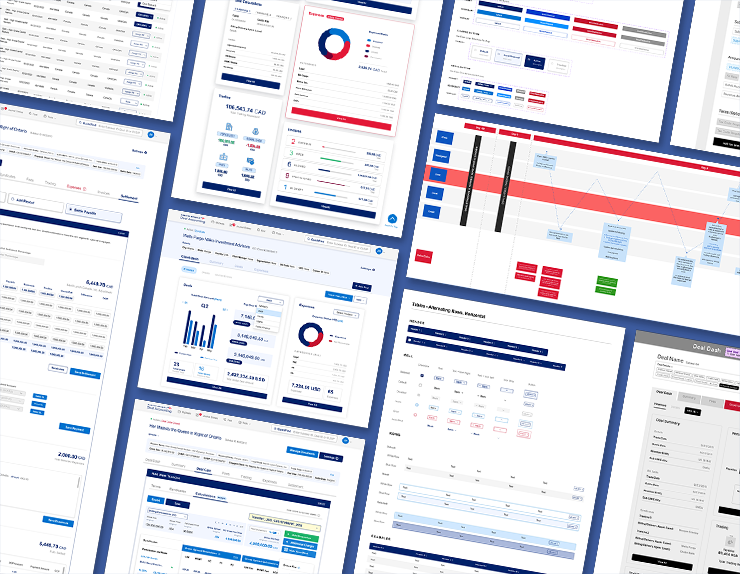
Insights were synthesized into a prioritized set of business requirements and translated into a well-structured backlog. From there, the team reimagined the application’s information architecture, navigation model, and interaction patterns to support more efficient workflows. A series of high-fidelity prototypes were developed to showcase key functionality and design directions, which were validated through iterative user testing sessions that minimized disruption to business operations.
OUTCOME
The final solution offered a fully redesigned, globally accessible investment management tool that accounted for complex financial interactions while drastically improving usability, performance, and trust in the system. The modernized application incorporated dynamic currency conversion, intuitive task management, and full support for saving progress and resuming data entry ensuring better adoption and reducing reliance on external tools.
A robust design system was also delivered, allowing for scalable, reusable design components that could be applied not only within this application, but across future modernization efforts within the client’s technology ecosystem. The lean and efficient design approach brought the project under budget and allowed additional out-of-scope features to be included in the MVP. Engineering teams were provided with detailed implementation guides, redlines, and component documentation to ensure pixel-perfect development and consistency at scale.
Deliverables
- Synthesized insights from global stakeholder and user interviews
- UX strategy documentation and workflows
- Product audit and requirements backlog
- High-fidelity prototypes and functional flows
- Detailed wireframes and interaction designs
- MVP success metrics and design scalability strategy
- End-to-end Design System, component library, and pattern documentation
IMPACT
The modernization of the investment management tool significantly elevated operational effectiveness and user confidence, while aligning the client’s global investment operations with compliance and governance standards. Centralizing investment deal data and integrating dynamic financial logic enabled faster, more accurate decisions and brought global parity to a once fragmented experience.
Key Outcomes & Metrics
- Replaced a 20-year-old legacy system with a modern, web-based solution
- Reduced user reliance on Excel and external workarounds
- Integrated real-time financial data and local currency considerations
- Achieved a 20% reduction in user error through standardized workflows
- Enabled consistent fee and dividend calculations across teams
- Provided ADA-compliant design for improved accessibility
- Supplied a scalable design system supporting enterprise-wide UX consistency
- Created development guides to accelerate engineering adoption and alignment